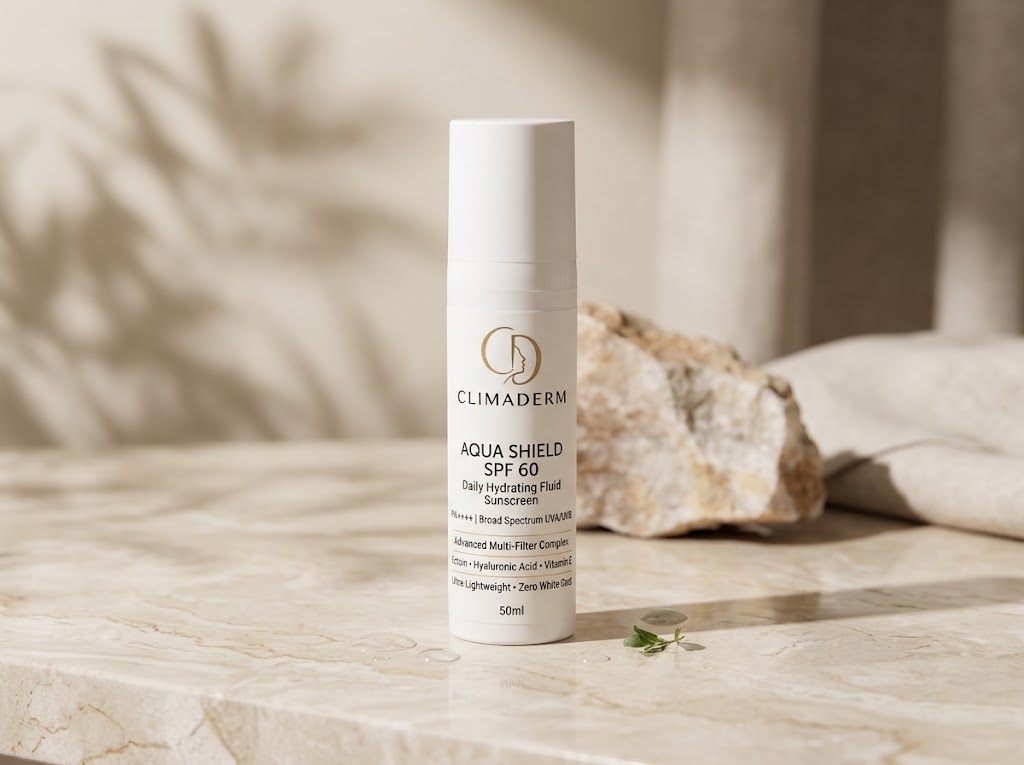
From a Technology Guy to a Research-Driven Skincare Founder
I never imagined that one day I would build a skincare brand.
My professional journey began in the technology industry. Since 2004, I have worked in IT equipment supply and networking for the corporate sector. My approach has always been to understand a problem, investigate its causes and find a practical solution. In tech, there is a fundamental truth if the system’s underlying code is flawed, no matter how sleek or glossy the user interface looks, the product will eventually crash.I never imagined that one day I would find myself applying this very principle to Pakistan’s skincare industry
Skincare, however, was something I initially knew very little about.
The experience that changed my perspective
Skincare products were already part of my family's routine. My family had recommended serums to me a few times, but honestly, I wasn't convinced they were worth using.
That changed when I started my weight-loss journey. After losing weight, I noticed uneven skin tone on my face. I had heard about serums and skincare products, so I decided to explore them.
Being from a technology background, I approached the process differently. Instead of following advertisements, I started researching leading international and local skincare brands online.
But something unexpected happened.
I found it surprisingly difficult to choose the right product.
As a new skincare consumer, I was looking for guidance: What was my actual concern? Which ingredients should I look for? What products should I use together? And how could I understand which product was suitable for me?
Instead, I often encountered product discounts, bundles and similar marketing claims. Many products appeared to promise almost the same benefits, while ingredient lists alone did not help me understand which formula was appropriate for my needs.
After considerable research, I ordered a facewash, moisturiser, serum and sunscreen from a reputed local brand.
I was genuinely excited. I thought I had finally found a routine that would help with my uneven skin tone.
However, after two to three days, I experienced acne. I suspected that the moisturiser might have been contributing to the reaction, although I could not establish the cause with certainty. Disappointed, I stopped using the products.
A few months later, when my facewash ran out, I decided to use the facewash from that earlier bundle. I noticed that its smell had changed. I could not establish why, but the experience made me question something I had never considered before:
What actually goes into a skincare product, and how do we know it remains suitable and stable during its intended use?
From a consumer problem to a business idea
Later, while exploring opportunities to start a new business, I remembered my experience.
There is a principle in technology that has always made sense to me: build something that solves a real problem.
I began researching the skincare industry more seriously. The more I explored, the more questions I had.
I wanted to understand the difference between an ingredient being mentioned in marketing and being meaningfully used in a formulation. I wanted to understand ingredient concentrations, formulation compatibility, product stability and the relationship between a formula and the skin concern it was designed to address.
I also felt that many skincare websites could do more to educate new customers. Discounts and product promotions are easy to understand, but choosing skincare requires more than a promotional offer.
I wanted to build something different: a brand where product decisions could be explained, ingredients could be disclosed transparently and customers could make more informed choices.
Why I chose to understand formulation myself
Initially, I did not plan to manufacture products myself.
My intention was to understand the role of ingredients and their behaviour in skincare formulations, then outsource research and development to a manufacturer.
I studied books, enrolled in international paid courses, attended local formulation-related training and completed shorter online courses.
When I started meeting manufacturers and discussing white-label development, however, I realised that I was not getting the level of technical explanation I needed to feel comfortable proceeding.
I had questions about ingredient selection, percentages, formulation rationale and whether the proposed formula could genuinely support the intended product claims. The answers I received did not give me enough confidence to proceed blindly.
I reached an important decision:
If I was going to put my brand name on a product, I wanted to understand how that product was developed and take responsibility for its formulation decisions.
That meant taking a much harder route: setting up my own development and manufacturing process rather than simply choosing a ready-made white-label product.
The reality behind product development
The journey was far from easy.
Setting up a laboratory, sourcing suitable raw materials and finding reliable testing equipment were major challenges. Some ingredients were difficult to obtain. Some experiments did not behave as expected. Many formulation prototypes failed to meet the standards I was aiming for.
There were moments when a formula that looked promising during development did not deliver the texture, stability or performance I wanted.
Each failure meant going back to research, reviewing the formulation and trying to understand what needed to change.
This process taught me an important lesson:
A skincare formula is not simply a list of popular ingredients. Every ingredient has a purpose, a suitable concentration, compatibility considerations and limitations. The complete formulation matters.
Science, guidance and responsibility
Throughout this journey, my doctor brother has supported me with clinical evidence, guidance on understanding skin concerns, product-selection discussions and input involving dermatologists.
That support has helped me approach product development more thoughtfully.
I also believe that formulation development and clinical validation are different responsibilities. A well-researched formula still needs appropriate testing and evidence before strong product claims can be made.
I do not want to ask customers to trust a claim simply because it sounds impressive.
I want our decisions, disclosures and testing standards to provide reasons for that trust.
What we believe in
Our philosophy is built around a few principles:
-
Research before trends: Product decisions should begin with the skin concern and available evidence, not simply popular ingredients.
-
Ingredient transparency: We aim to disclose ingredient percentages clearly and responsibly, with accurate information about what those percentages represent.
-
Purposeful formulation: Ingredients should have a meaningful role in the formula rather than being included only to create marketing appeal.
-
User-focused development: Different users and different skin needs may require different formulation approaches.
-
Climate-aware skincare: We want to explore formulations suited to Pakistan's different environmental conditions, including coastal humidity and hotter, drier inland climates.
-
Responsible claims: We will not promise more than our evidence can support.
Our vision
My long-term vision is to bring advanced skincare ingredients, formulation technologies and thoughtful product development to Pakistani consumers.
I want Pakistani customers to have access to products developed with the same curiosity, attention to detail and commitment to research that they expect from leading international markets.
This is not simply about launching another skincare brand.
It is about building a company that keeps learning, keeps improving and treats customer trust as a responsibility.
We started with questions. We are building with research. And we want to earn trust through transparency.
The Founder
ZOHEB MATEEN